
Systems to proof
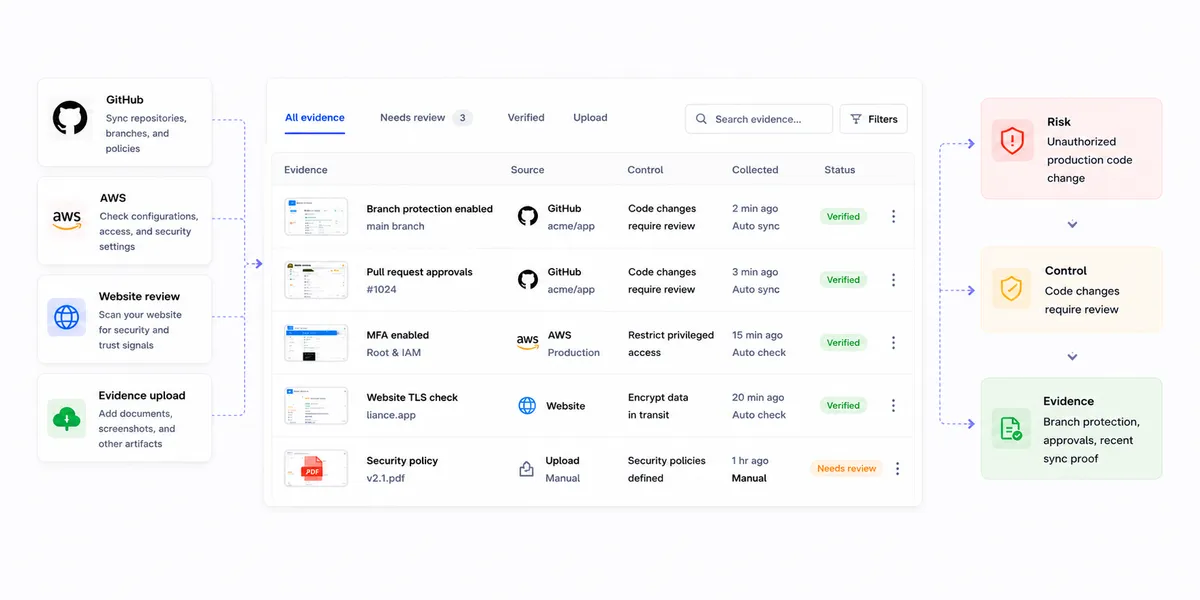
Turn live signals into a proof graph
Liance turns GitHub, AWS, and Cloudflare signals into one living proof layer that explains exactly what is covered.
 Liance
Upload what you already have. Liance turns documents, screenshots, and spreadsheets into an audit-ready evidence library.
Upload your screenshots, spreadsheets, exports, and policies. Liance shows what already counts, what's missing, and how close you are to audit readiness.
Start with docs
Use the files your team already has instead of connecting twenty systems before you know where readiness stands.
See the gaps
Find missing controls, stale proof, and unclear ownership before they turn into consultant hours or delayed deals.
Know if you're ready
Get a practical readout you can use to plan audit work, buyer review prep, and what actually needs fixing next.
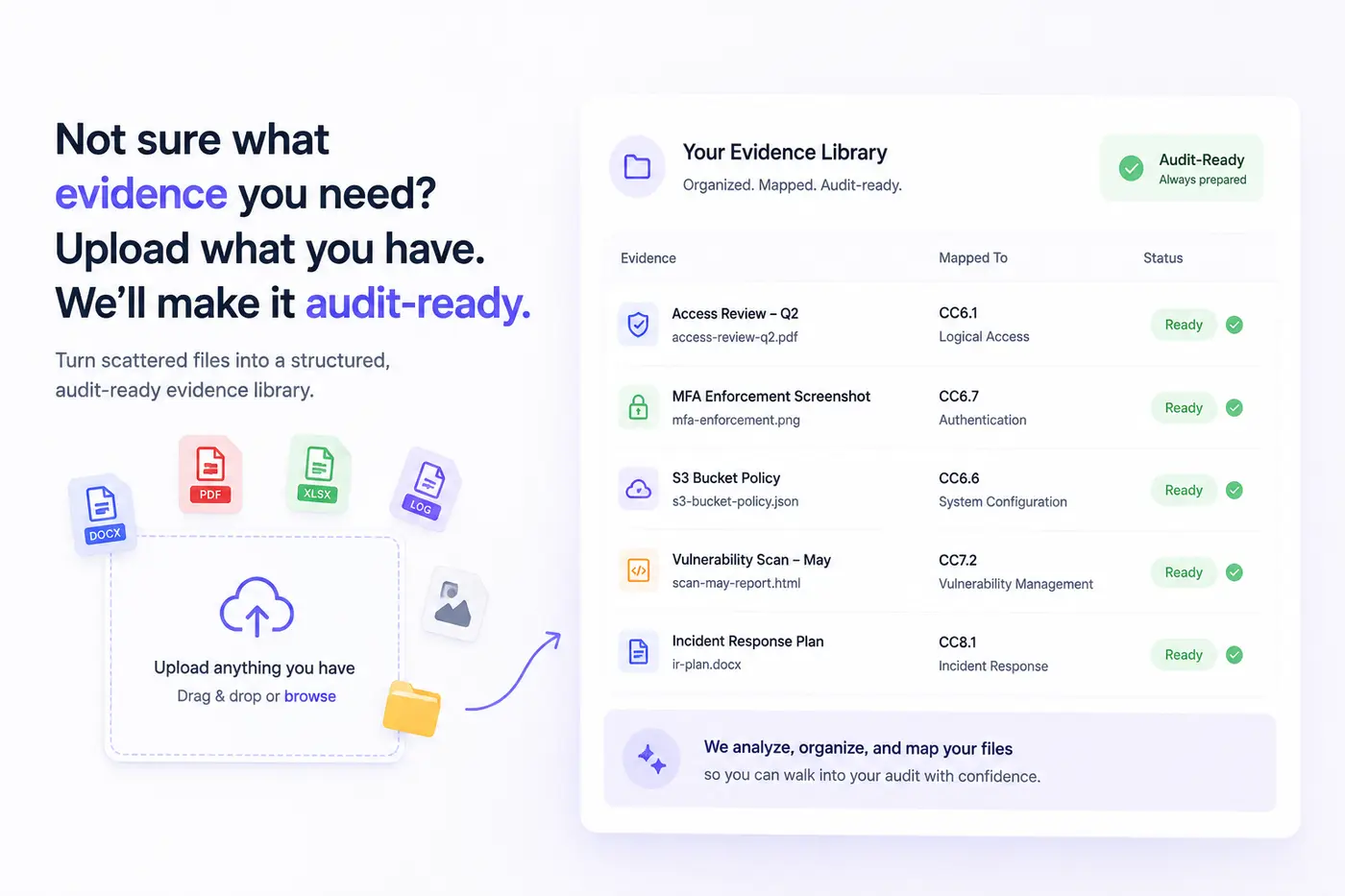
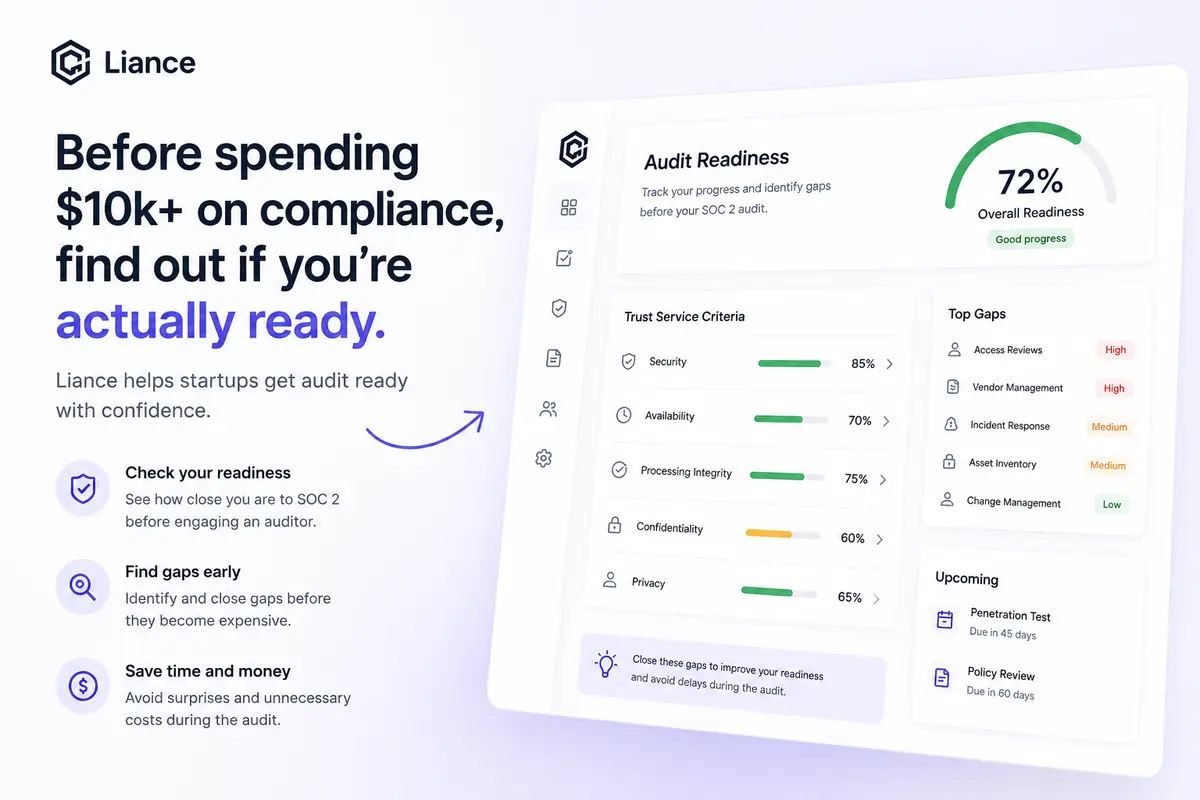
Most startups start paying for audits, consultants, and tooling before they know whether the foundation would survive buyer review. Liance shows what is already defensible, what would fail under scrutiny, and what needs fixing before you spend into chaos.
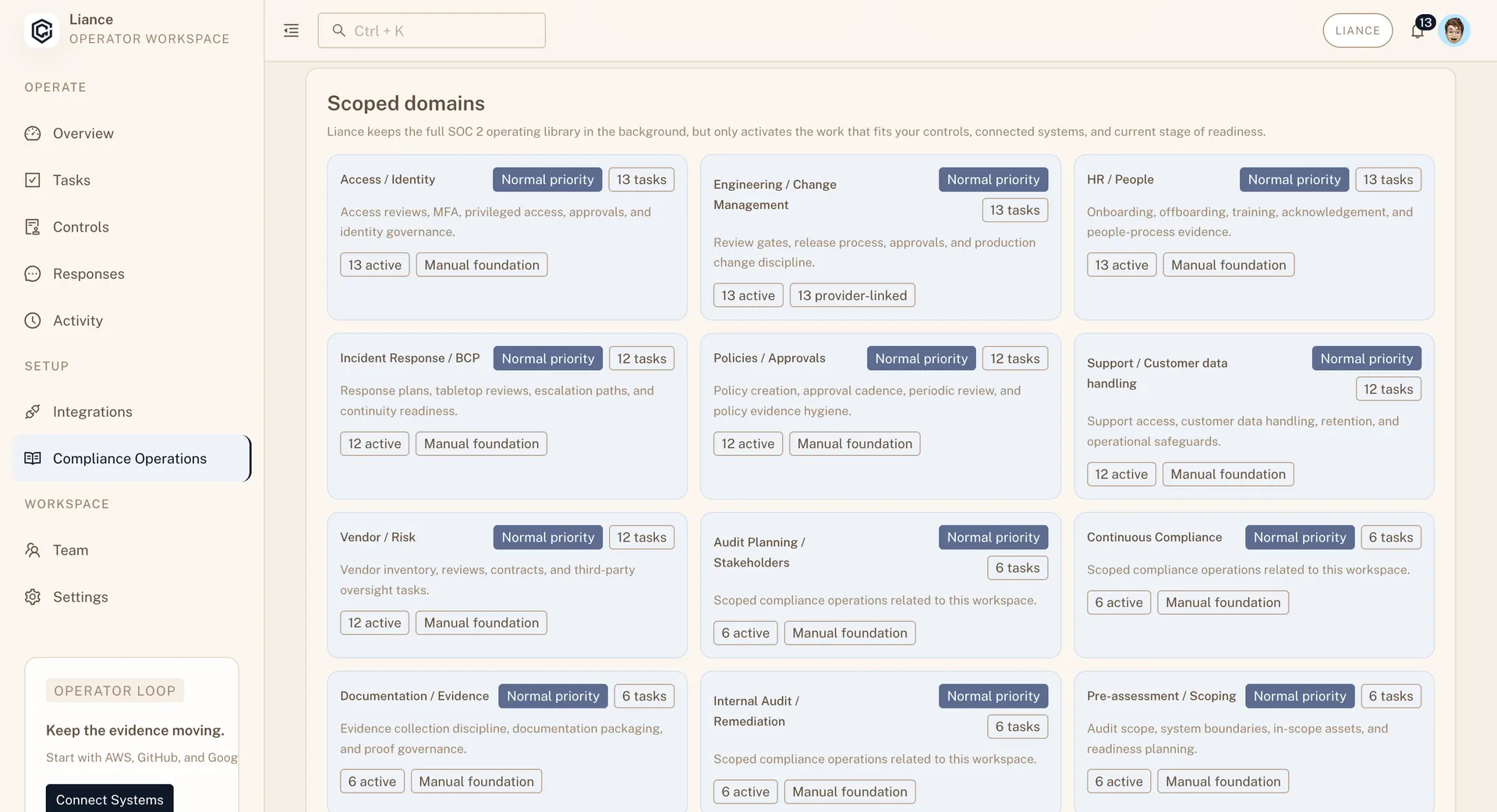
Get a clear view of which controls already hold up and which ones would break the moment a buyer or auditor asks for proof.
Surface stale evidence, missing reviews, paused integrations, and unowned gaps before they turn into consultant hours and audit delay.
Start the formal process with controls mapped, proof already flowing, and the hard questions answered before audit week starts.
Every slip in readiness is a deal you lose, a market you delay, or a customer you cannot move forward with.
Hey team,
As part of our vendor security assessment, it came to our attention that your company is not audit-ready for the controls our procurement team requires at this stage.
Without a current SOC 2 readiness package and supporting evidence, we will not be able to move this contract forward. We would be happy to revisit in the future.
Best regards,
Security review
Most teams do not need another dashboard. They need the evidence work, renewal work, and follow-up work to actually move without constant manual chasing.
Pull permission changes, sign-ins, and admin activity into one reviewable trail.
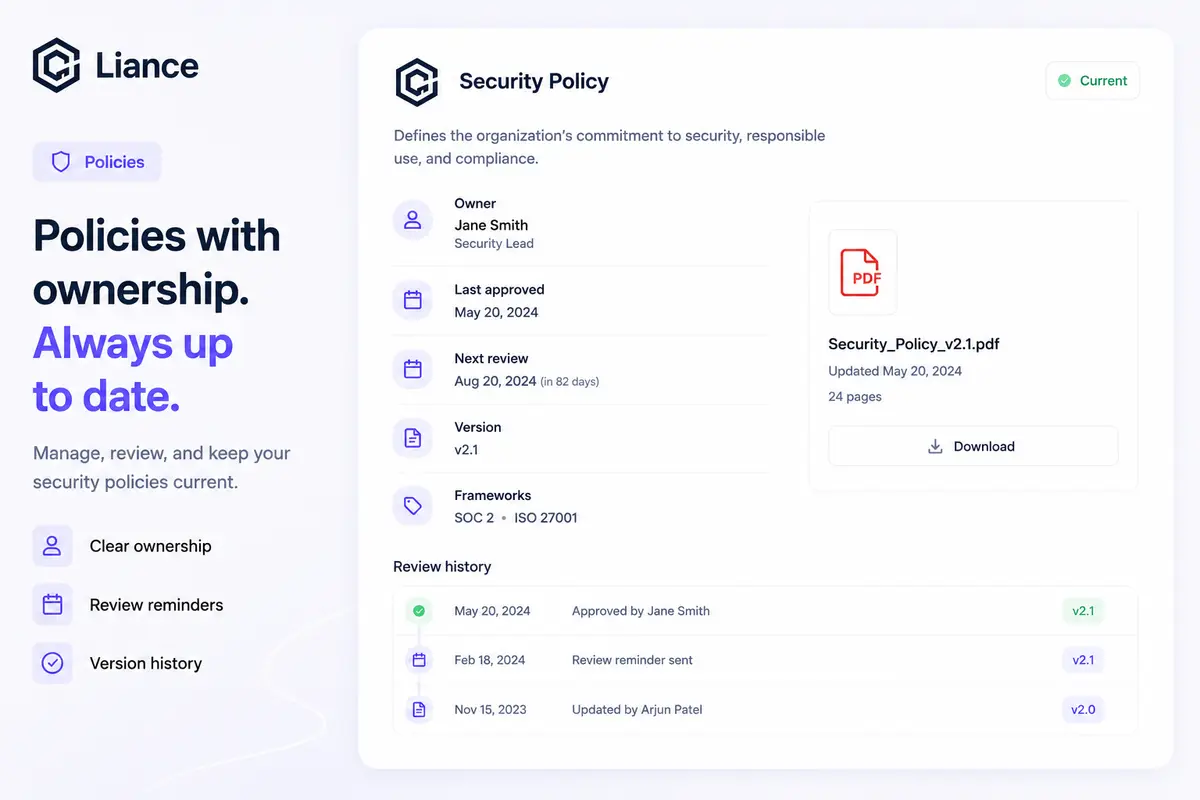
Track when key policies need review so nothing lapses quietly before the audit.
Capture visual proof for settings and workflows that APIs do not expose cleanly.
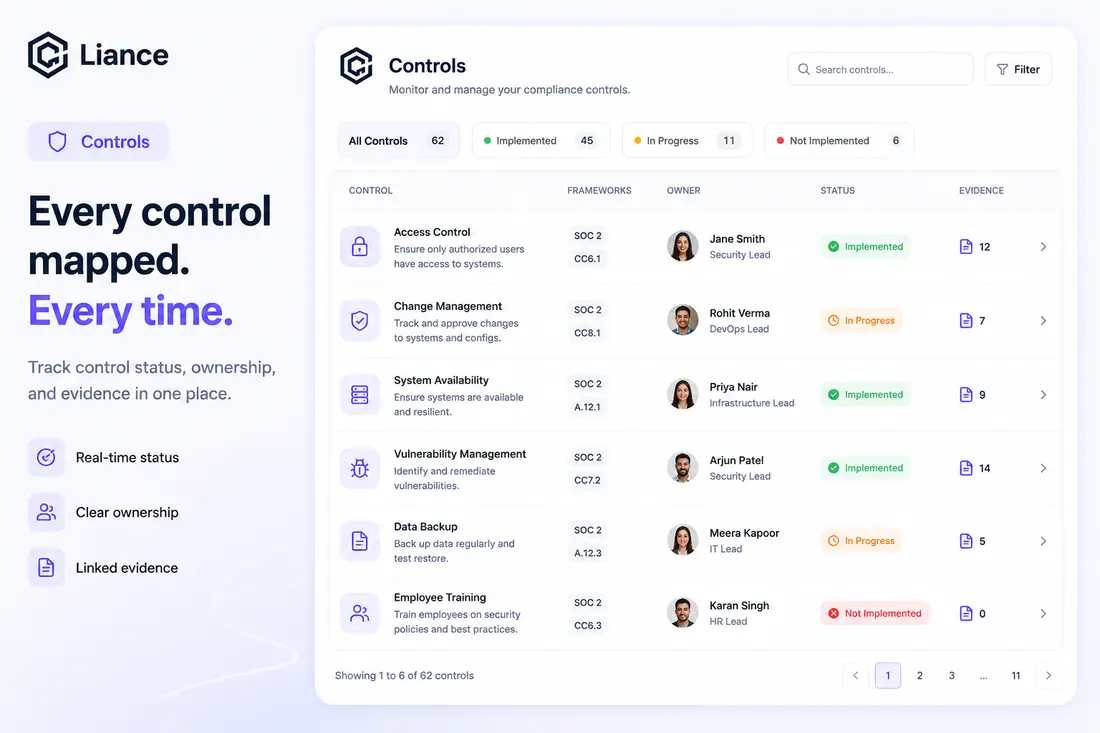
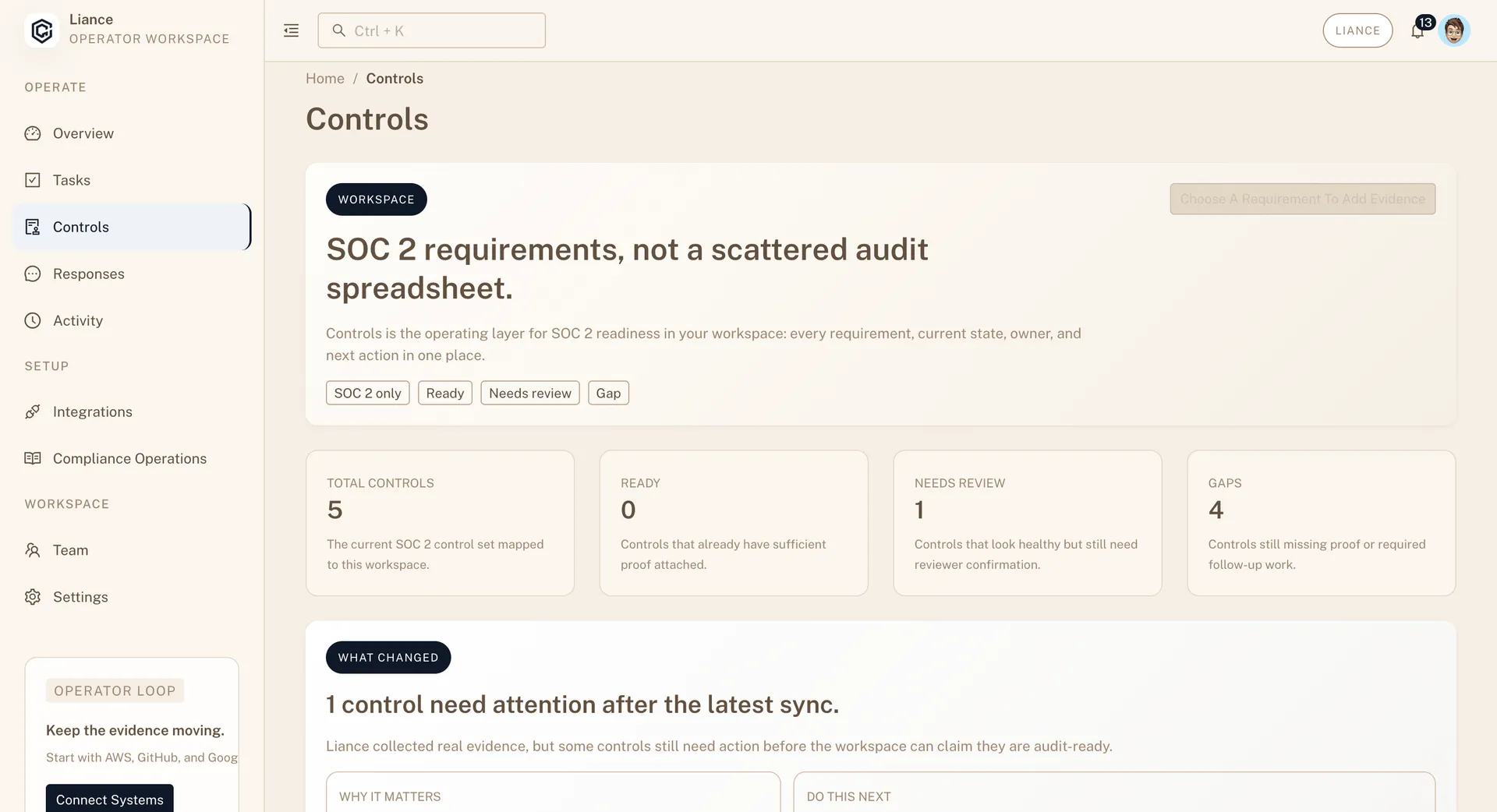
Link each artifact to the exact control it supports instead of leaving evidence unstructured.
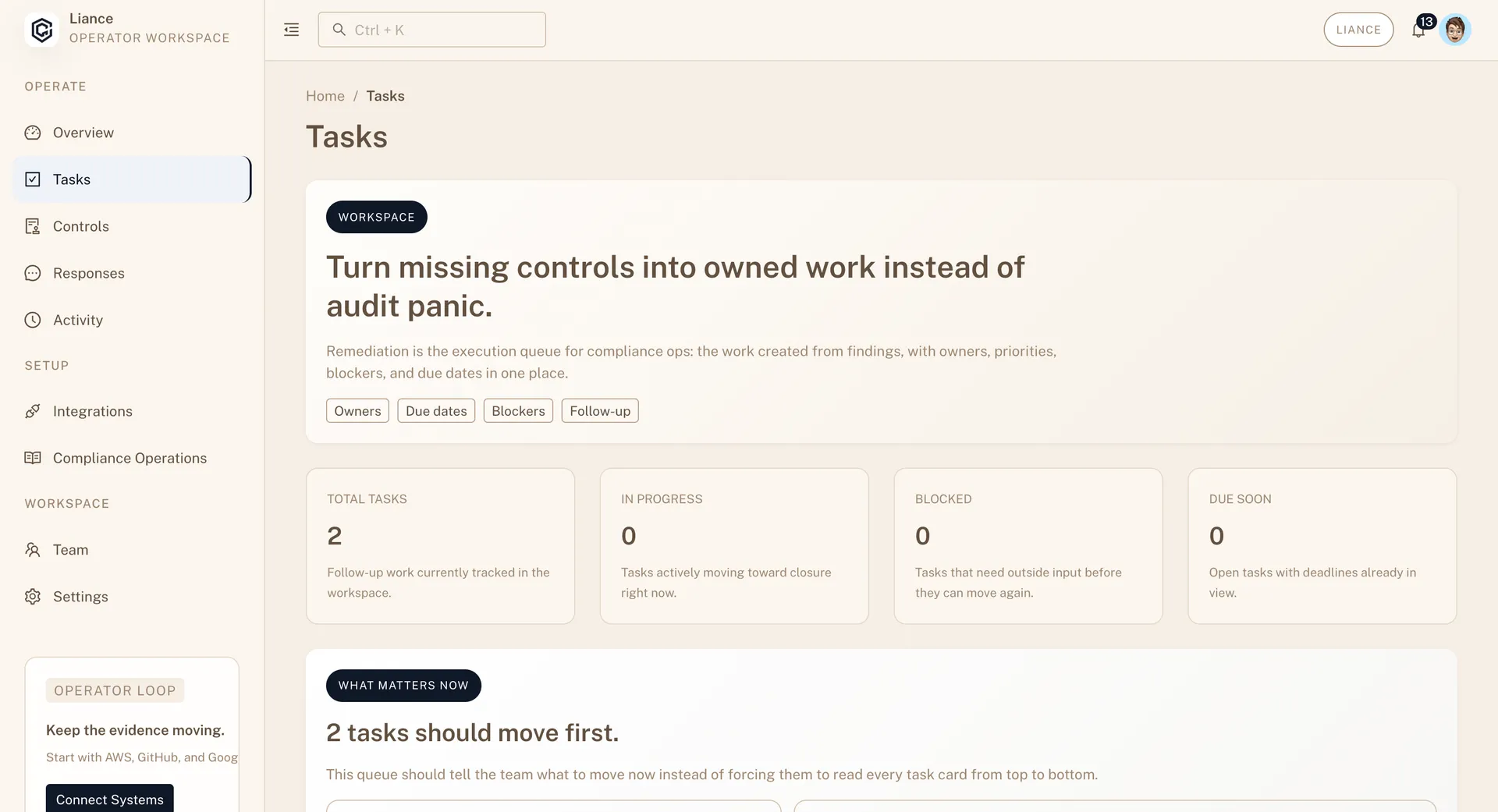
Turn missing proof and weak controls into named follow-up work with accountability.
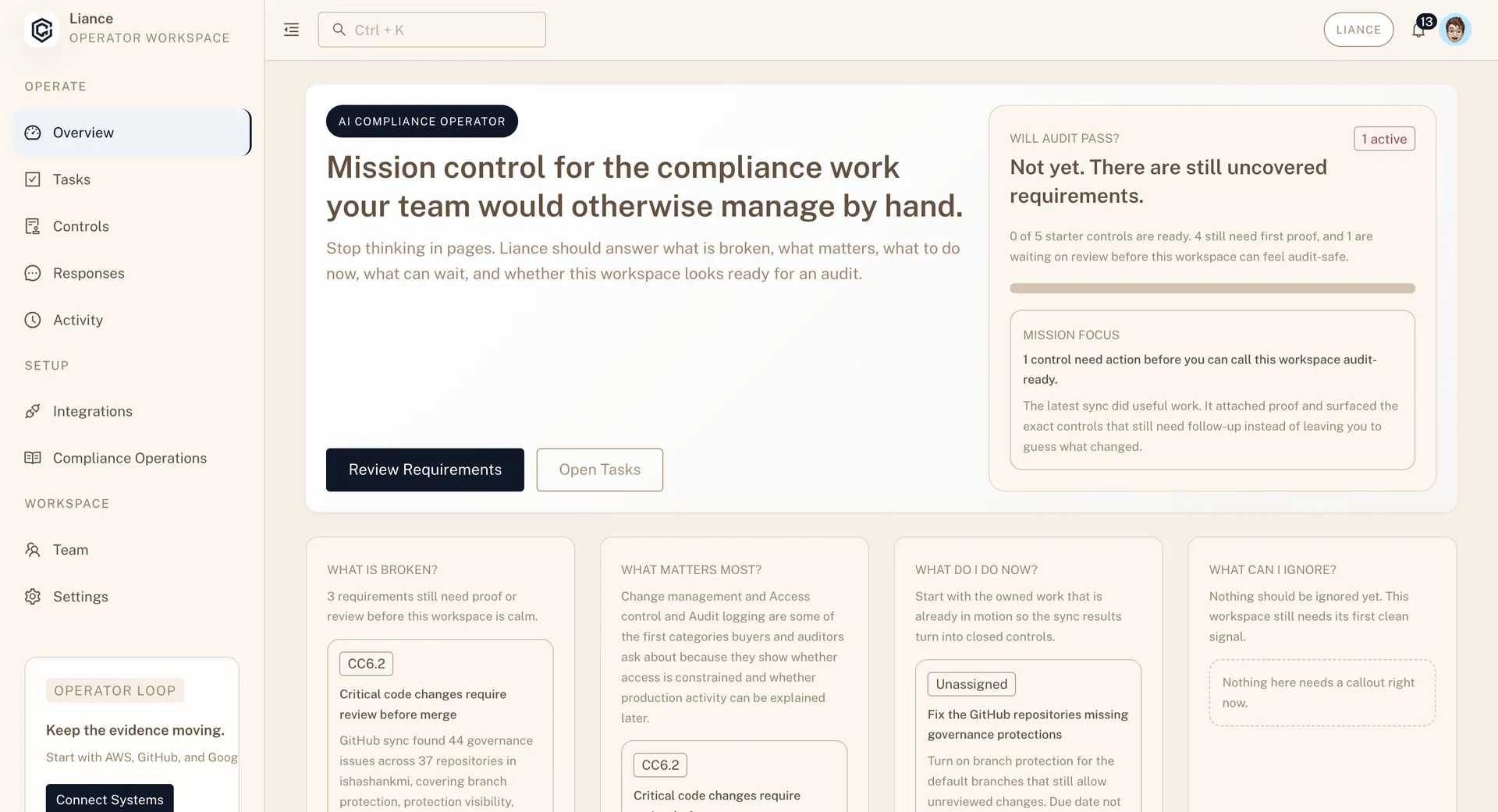
Connect GitHub, AWS, and Cloudflare, see stale proof and open gaps in one place, assign the work, and keep an audit-ready trail without rebuilding everything in spreadsheets.
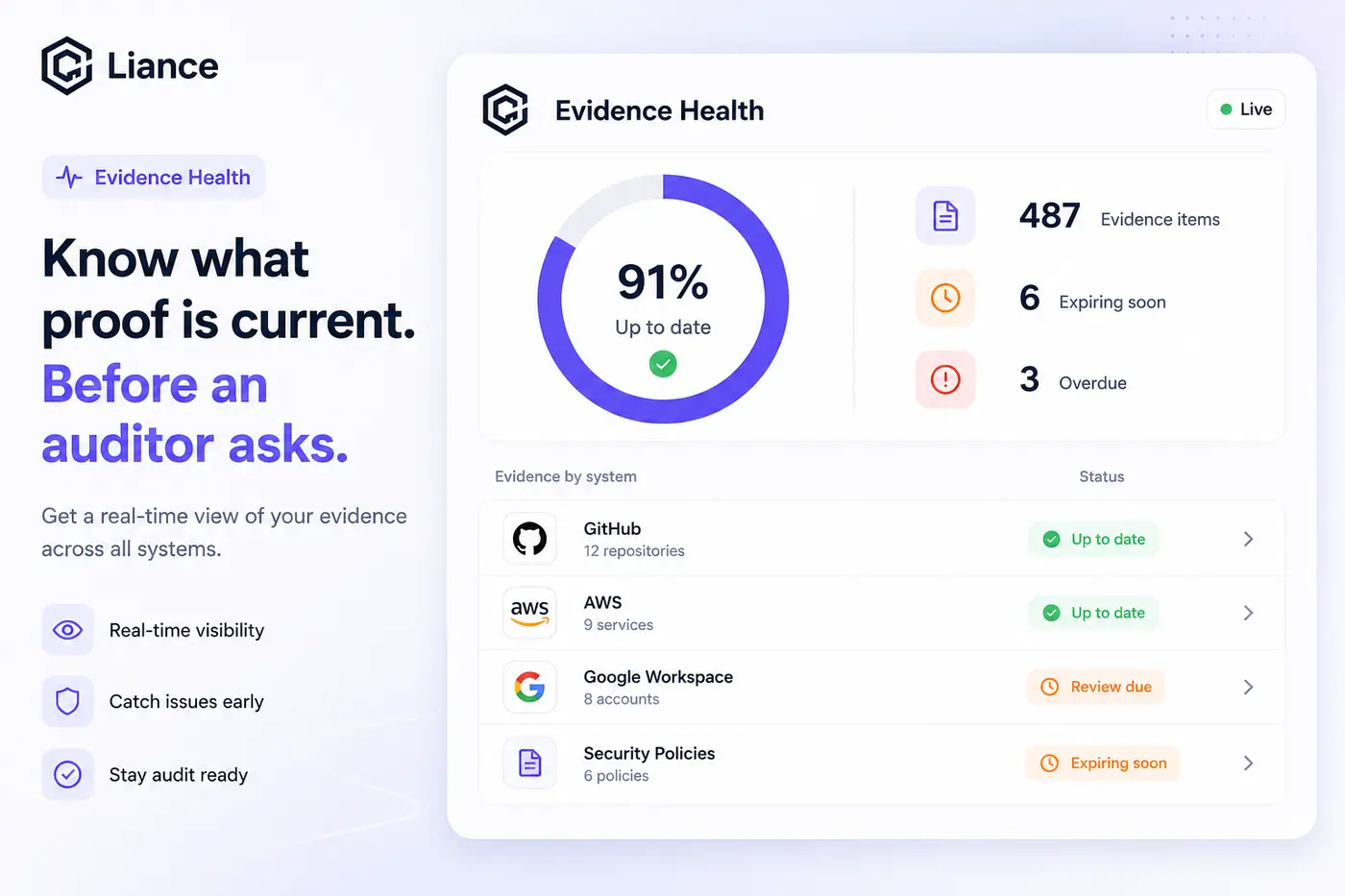
Liance turns GitHub, AWS, and Cloudflare signals into one living proof layer that explains exactly what is covered.
Keep a live view of stale evidence, changing controls, and gaps that need attention before the audit timeline gets tight.
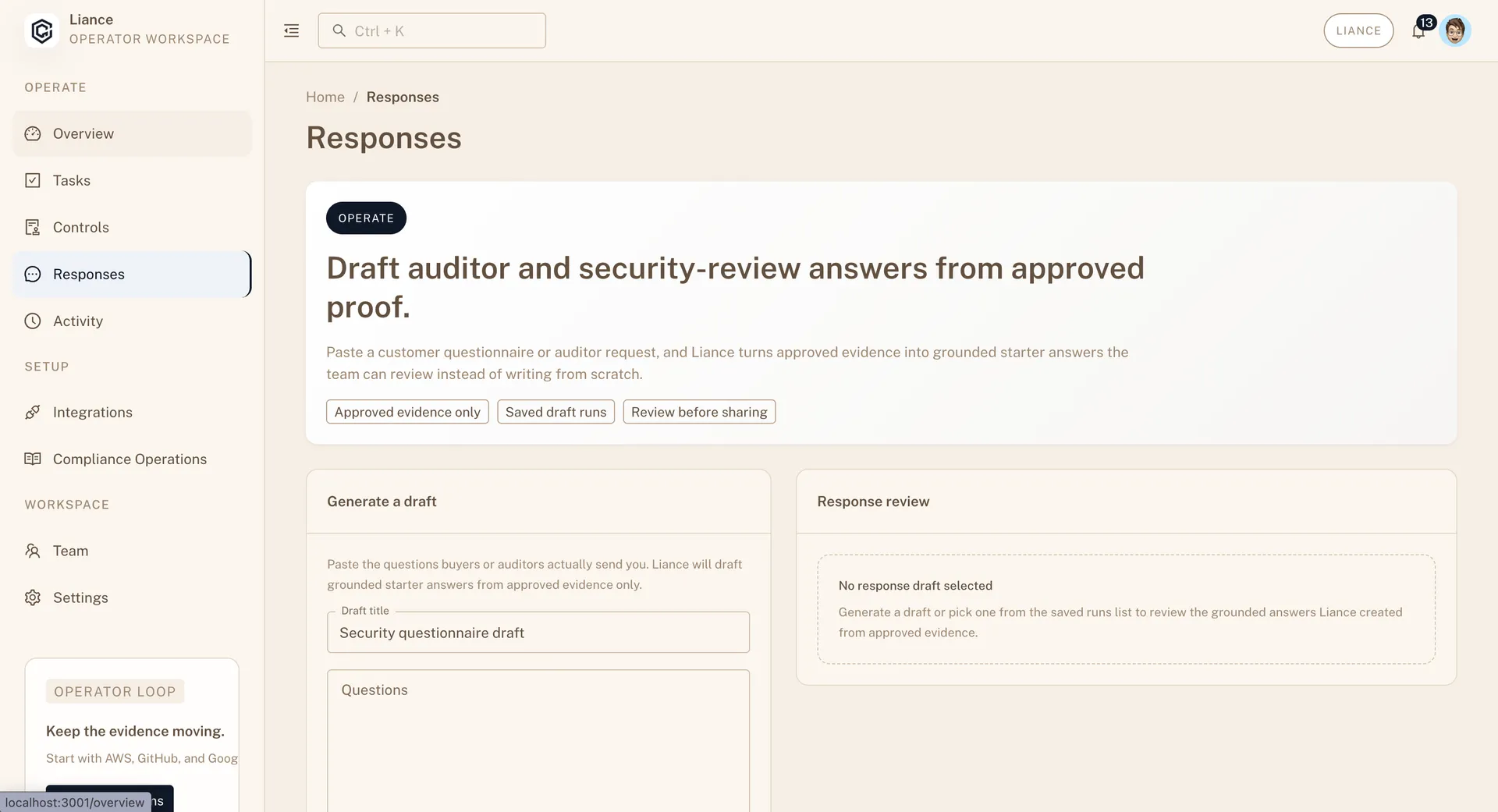
Track drafts, approvals, and expirations with real owners and versioned proof in one place the team can actually work from.
Liance removes the "discovery lag." We show you exactly what is missing instantly so you can focus your time on closing the gap.
Connect GitHub, AWS, and Cloudflare. Liance instantly identifies your control gaps and missing evidence.
Use Liance AI to draft missing policies and get step-by-step guidance on fixing cloud configuration issues.
Download your full evidence package and control mapping. You are now officially ready for your auditor.
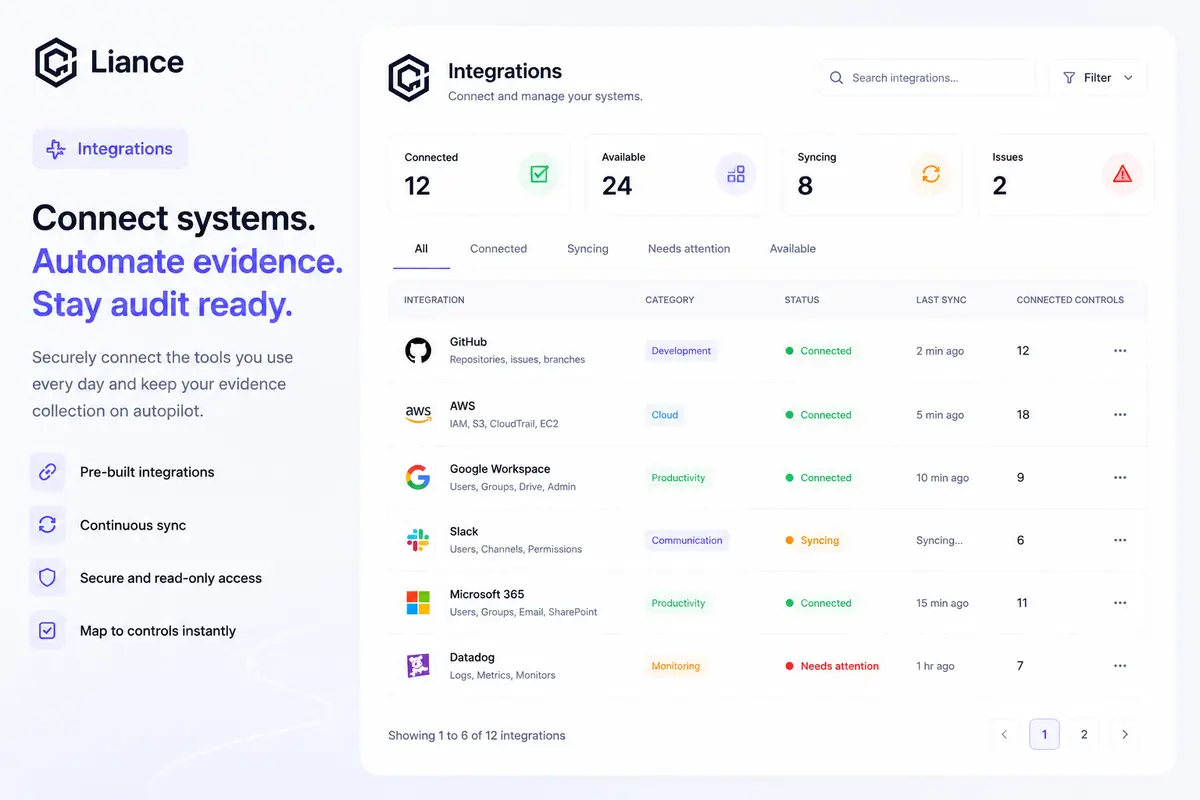
Liance plugs into the systems where trust work already lives, so evidence, drift, and access changes can move into one operating layer without a manual copy-paste loop.
Pull code, cloud, identity, and project signals into one proof workflow.
Start with what your team already runs instead of rebuilding trust operations from scratch.





Once you understand your workflow and readiness gaps, the cost difference becomes obvious: one path is manual and expensive, the other keeps your team in control.
One-time boutique consulting fees, manual evidence chasing, and months of delay.
Continuous readiness for startup teams that want proof, visibility, and control without a consultant-heavy process.
Liance is a compliance readiness workspace for startup teams preparing for SOC 2. It helps organize evidence, map proof to controls, surface missing work, and keep audit readiness from drifting between reviews.
Liance is built first for B2B startups, especially teams handling SOC 2 for the first time or trying to keep renewal cycles cleaner without hiring a full internal compliance team.
No. Liance is not the independent auditor issuing the SOC 2 report. It supports readiness work by keeping evidence, control context, and remediation work in one operating layer before the formal audit.